
I’ve been fortunate with my travels. Apart from a few small inconveniences—falling for a timeshare scam in Bali and being abandoned at the side of the road, having a camera stolen in both Cancun and Los Angeles (you think I would have learned the first time), suffering food poisoning in Veradero, sitting in a Florida ER after breaking blood vessels in my right eye—I haven’t fallen prey to serious injuries or other dangers while roaming the globe.

Being a travel writer/editor/blogger presents an interesting conundrum. For most people, a trip is a vacation, a chance to get away, to escape work, to forget about the responsibilities awaiting you at home. For travel professionals, it’s work. Not in a bad way, mind you—I will never, ever take for granted how fortunate I am to work in this industry—but it is work, nonetheless.
I knew something was amiss when my Kit Kat—my favourite of all the chocolate bars (okay, second favourite, after peanut butter cups)—tasted… wrong. Too sweet. Too fake. Too I don’t know what, but not good. Could it be true? Did I really change my tastebuds and cure my daily 3pm addiction to sugar in one week? Looks like it. And I blame Mountain Trek Resort.
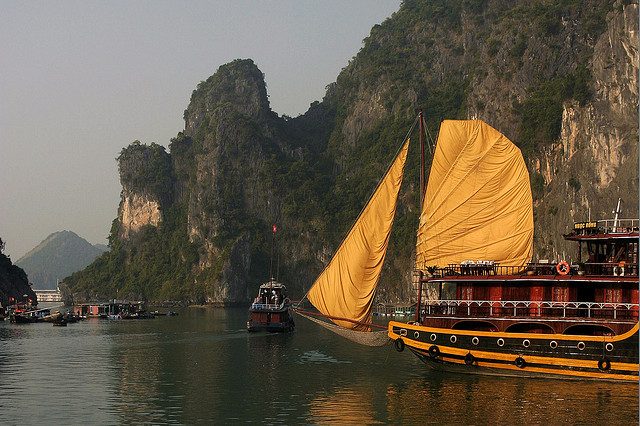
This blog post has two purposes: to brag excitedly share the news about my upcoming surprise trip to Vietnam (hang on, let me do a little spazzy dance—I’m going to Vietnam!!!) and to declare my undying love for the Toronto Travel Massive. And the two are intimately connected.

It all started 10 years ago. I was going through a rough time, a period of intense stress that had left me with a severe case of insomnia and—when I could finally sleep—nightmares.
My long-time friend and eternal voice of reason (and fellow mojito hunter) came to the rescue. Erika showed up at my house in downtown Toronto and told me and my roommate Shanna that she was whisking us away to her family’s cottage for the weekend, to kill off the negativity that had consumed us. We were to pack our bags with no worries for what awaited us back home, and head three hours north, to a patch of water near Pointe au Baril known as Harris Lake.

Tell someone you’re headed to Cuba and you’re likely hear two things: how beautiful are the beaches and how terrible the food. Yes, Cuban food can be bland, especially in the massive resorts where buffet-style fare leaves much to be desired. But what kind of dining experience can you find off-resort? That was what I wanted to find out as I headed to the city of Havana.

Two weeks ago, I was startled to receive an email from an associate producer at CBC Radio. She had read an article I wrote for TravelandEscape.ca, about getting lost in Sleeping Giant Provincial Park, and wanted me to appear on CBC’s morning program in Thunder Bay, Ontario, to talk about it.
Radio has never been a medium that I would have considered for myself. I’m a fast talker and occasional mumbler, especially when I’m nervous. Thoughts of public speaking bring me back to the horrors of giving speeches or presentations in school. And while being broadcast in any way is scary enough for me, the thought of doing it live is absolute torture.
So of course I agreed.
Read More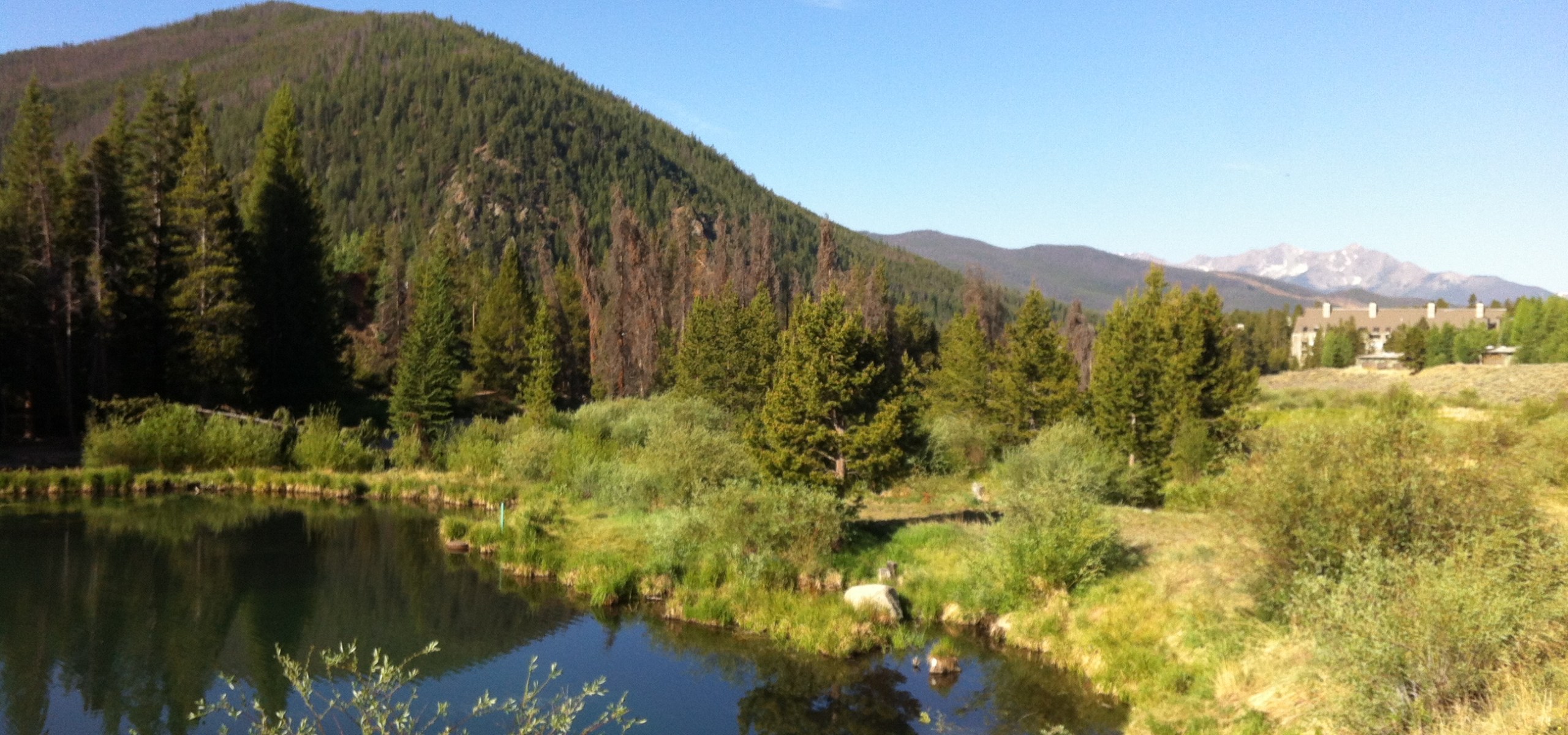
I wasn’t going to go to TBEX. On the surface, the reason was financial—flights from Toronto to Denver aren’t cheap. But there was another reason a few layers below that, somewhere between fear, self-consciousness and existential writer angst.
TBEX, if you don’t know, is the Travel Blog Exchange—an annual event “where new media travel writers come to network & learn.” It’s been going on for four years now, but this was my first year attending. And despite my excitement in the weeks leading up to it, I secretly wondered if I really belonged.
For some reason, calling myself a “writer” has never been easy. And “travel writer” even harder. And I’m not the only one. I spoke with several writers at TBEX who felt the same way, who felt like frauds and struggled with calling themselves writers—especially travel writers—aloud. Some said it was perhaps a female thing, that men don’t seem to have the same self-doubt about the title of “writer.” Another suggested that it was a constant need to climb another rung on the ladder before feeling like they had totally made it to “writer” or “travel writer.”
I know it’s silly. I’ve written travel features for newspapers, magazines and websites. I’ve travelled to foreign countries on assignment. I’ve edited travel stories for major publications. I am a travel writer. In social situations, when I’ve been asked what I do for a living or what kind of writing I do, friends have piped up to declare over my mumbles, “She’s a travel writer!” It’s a glamorous job title, I know, and that’s maybe why I cringe a bit when I hear it. Because I’m not a Paul Theroux or Bill Bryson or, in today’s digital travel writing world, a NomadicMatt or SoloTraveler. And so, the title has always felt slightly askew. Travel writing isn’t all I do. As of right now, it isn’t even the bulk of what I do. I live my “real” life as a trade magazine editor, and then moonlight my true passion as travel writer and editor.
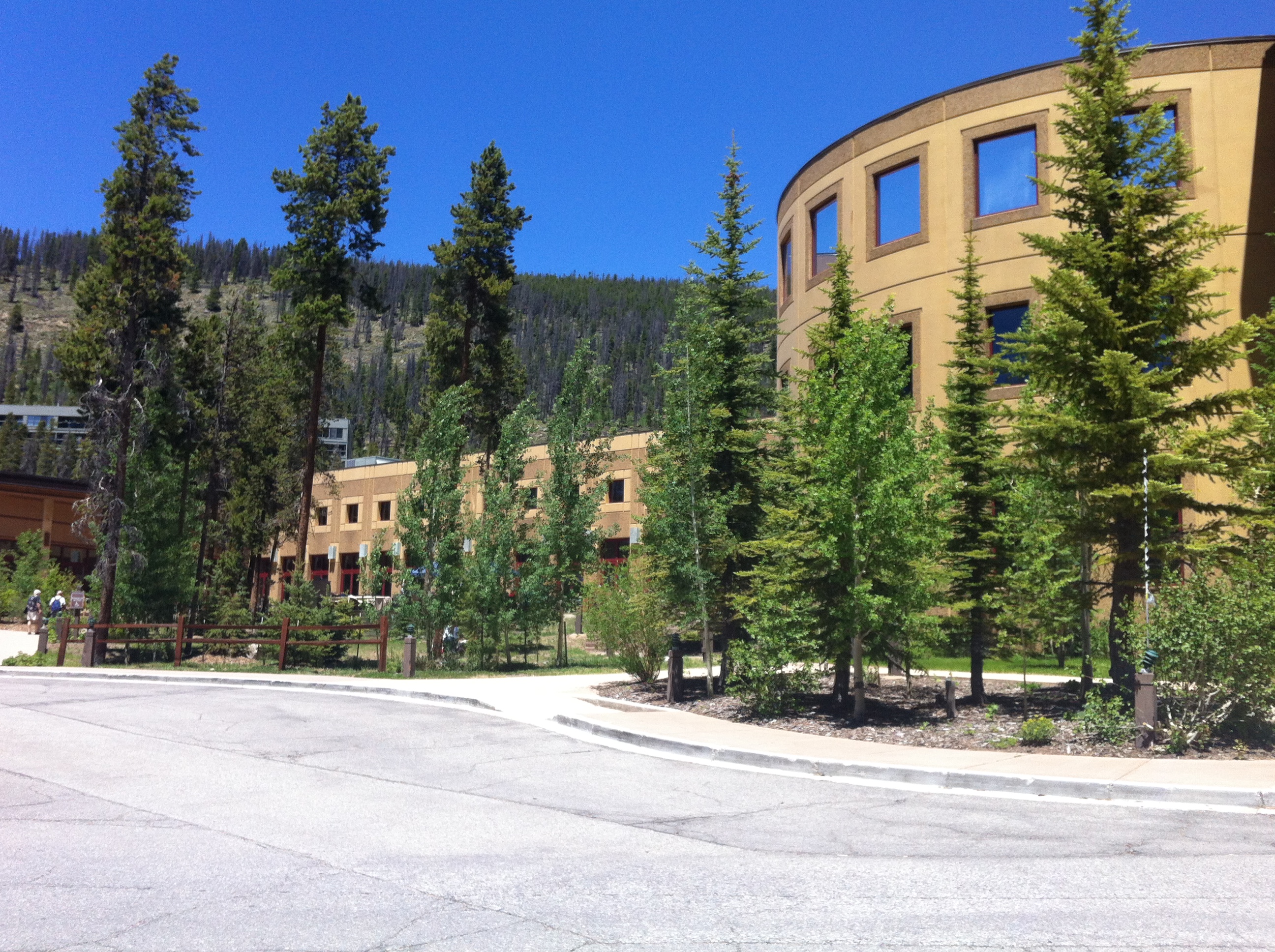
The Keystone Conference Centre: TBEX’12 headquarters
And so, that’s why I felt uncertain about TBEX. I worried that because I don’t travel write full-time and my blog is a bit of an unbranded mess at the moment, I’m an imposter.
I should have slapped myself. Seriously. Have you ever heard such self-absorbed, whiny drivel?!
Here’s the thing that I realized within 30 seconds of arriving at TBEX: No one cares. I love travel and I love to share stories about travel. And that’s all that’s required to appreciate all that TBEX has to offer (although, a knowledge of WordPress and Twitter is also a good prerequisite). Forget about worrying who’s pro and who’s learning, who makes money off their blog and who does it for fun. I met journalists who are just learning to blog, travellers who are just starting to earn an income from their adventures, and pros who have been doing this (and making money doing it) for years. And all of us were there for the same reason: to learn, to meet likeminded people and to share our love of travel. (And to drink copious amounts of wine and beer while doing so.)
This year’s conference was held at Vail Resorts in Keystone, Colorado, amid breathtaking views of snow-capped mountains and seemingly endless forests. The altitude (9,000 feet) made for some difficulties (many complained of headaches, dizziness, nausea and shortness of breath), but otherwise, the location couldn’t have been more perfect.
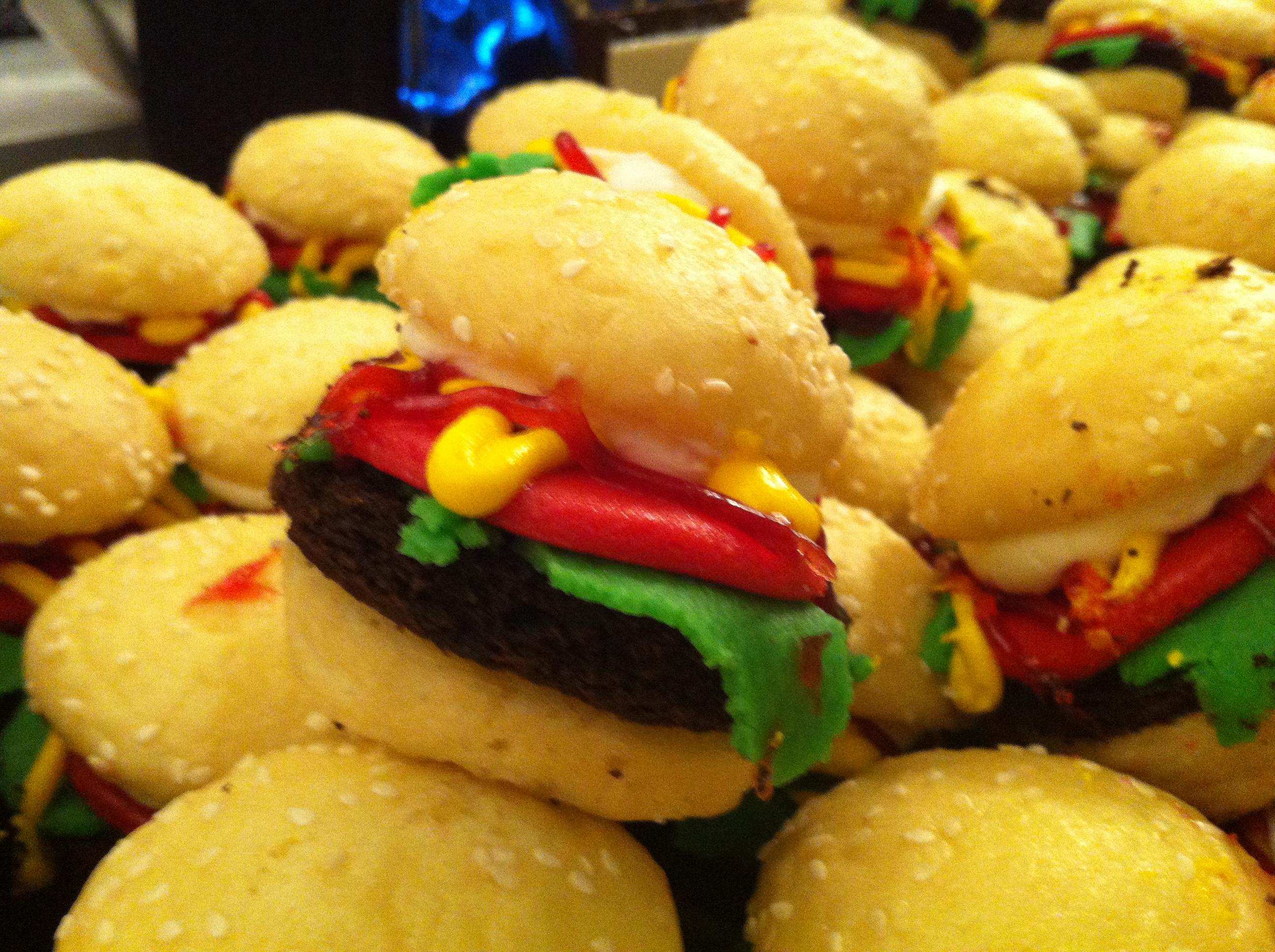
Creative chocolate concoctions at 11,000 feet
And Vail was the ultimate host. From a mountain-top party at 11,000 feet (complete with a champagne gondola ride, gourmet meals, endless beer and wine and the most kick-ass dessert buffet and creative pastries I have ever seen in my life), to perfectly timed shuttles chauffering us around the resort, to incredibly friendly and accommodating staff in the hotels and pubs, the venue was spectacular.
As well, conference sponsor Expedia hosted a Western-themed party that charmed us all with its mechanical bull, bbq’d brisket, live band and bonfire.
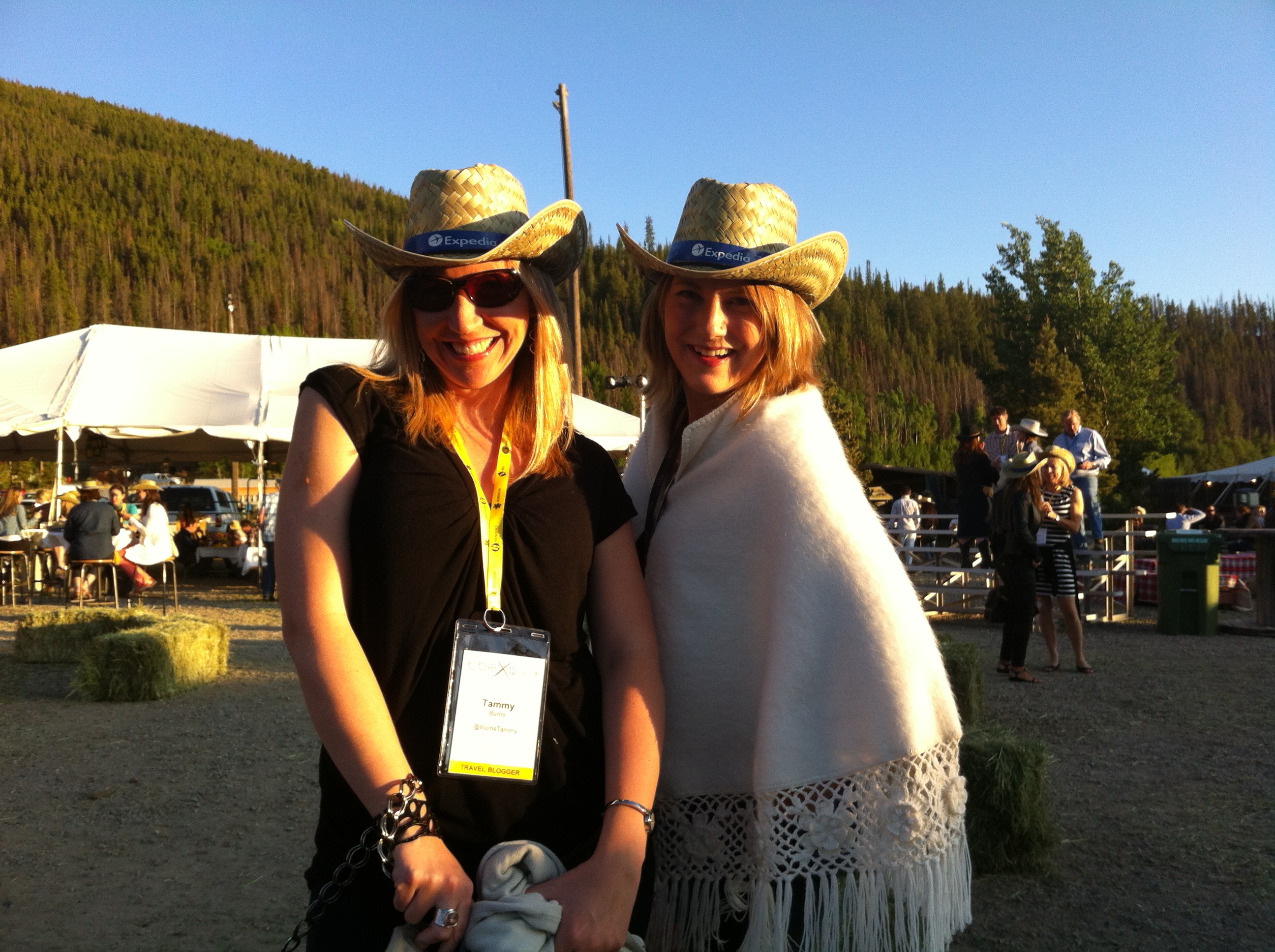
Playing cowgirls with my TBEX roommate, Mariellen Ward of BreatheDreamGo.com, at the Expedia party
And then, of course, there was TBEX itself. TBEX was bought by BlogWorld this year, and the acquisition has transformed it from a low-key, messy gathering to a full-on professional event. Even though I hadn’t been to previous TBEXs, I had heard enough to know that organization wasn’t their forte.
But all of that has clearly changed under BlogWorld’s capable guidance. I have attended lots of conferences over the years, but none of them have impressed me the way TBEX did. The sessions were interesting, the structure was organized, the keynote speakers were incredibly entertaining and the overall mood was constantly fun, friendly and inspirational.
As renowned travel blogger Gary Arndt wrote after the event, “Prediction: TBEX is going to become HUGE. This is going to go well beyond blogging. I think this is poised to become the new media show for the whole travel industry.”
When I think back on how I almost missed TBEX because of my own self-doubt—correction, self-pity—I cringe. Yes, I’m in the same spot as I was then (blog needs revamping, career is still only partially travel-based), but I am inspired and motivated and encouraged by the excitement of TBEX and all the people I met. And I have a clear goal now: to build my business plan, to find my brand, to hone my niche before next year’s TBEX.
Because, after all, I’m a travel writer.
When we travel, or prepare to travel, we can often get caught up in the safety precautions: strategically hiding our money from pickpockets, tucking passports into secret pockets of our backpacks, hiding valuables under pillows while we sleep in hostels. Sometimes, between all the hoops we have to jump through at airport security, combined with the preparation for what dangers might happen abroad, I wonder if travel is nothing more than an experiment in mistrust. And sadly, many of us travellers have had an experience or two to lead us down into that spiral of fear.

The taxi pulled toward the curb and shuddered to a stop. It was already filled with people, but we squeezed our way in to join the crowd—four of us in the backseat, three up front. Then we took off, hiccupping down the road at a tortoise pace inside a vehicle with the temperature of a sauna. Beside me, one of the passengers was engaged in a heated debate with the driver, the two of them yelling to be heard over the pounding beat of salsa pouring from the radio.
 Anywhere & Here